Wx Feature · Weather & music
The song that taught us a ship's name.
If you know the name of exactly one Great Lakes freighter, chances are Gordon Lightfoot taught it to you.
November 10, 1975 · Lake Superior · 3 min read
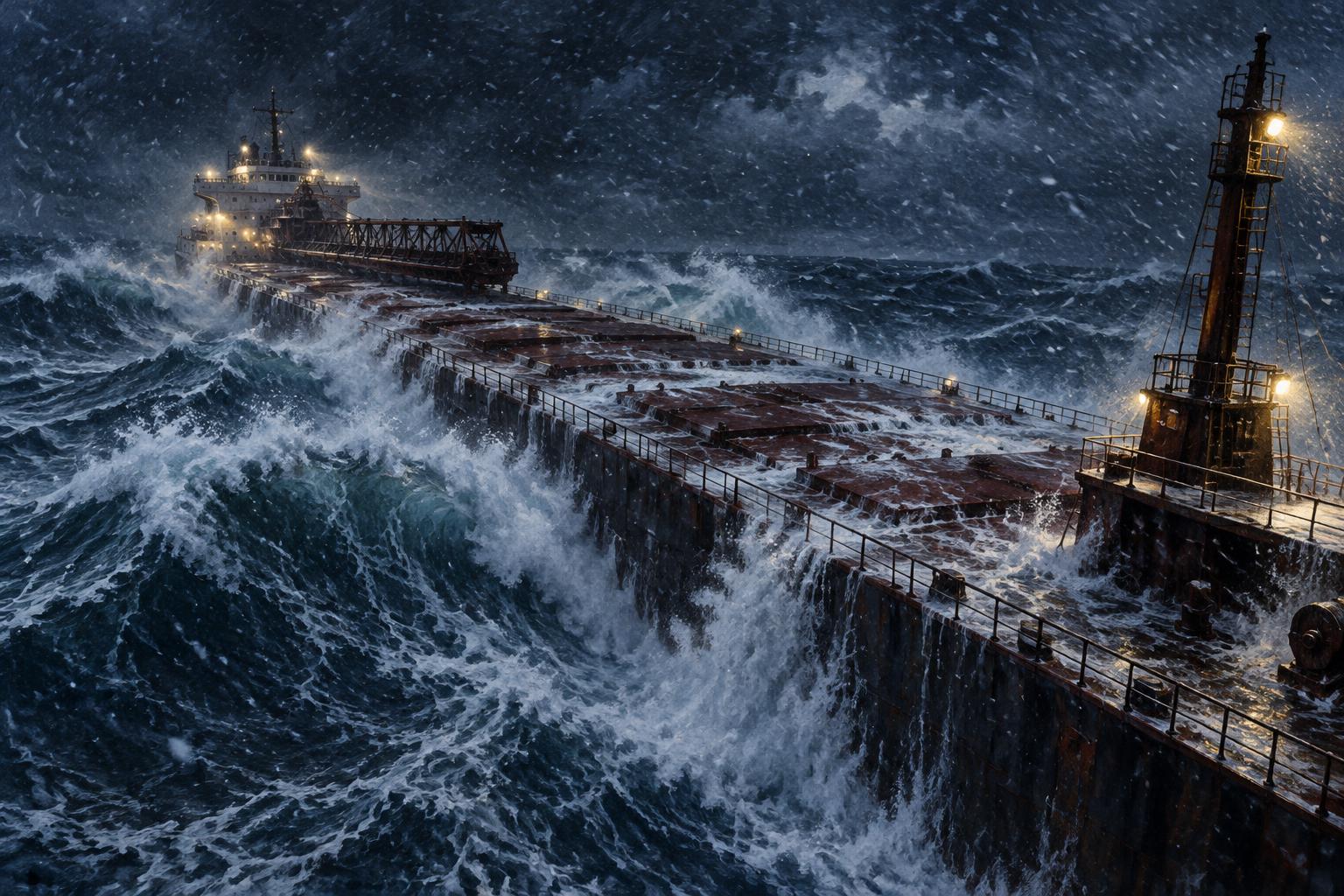
The last voyage
Nov 9, 1975
Iron ore leaves Wisconsin for Detroit
Nov 10, evening
Snow, ~25 ft waves, water on deck
Around 7 PM
“We are holding our own.”
Minutes later
Lost 17 miles from Whitefish Bay
August 1976
Lightfoot's song reaches the world
A news report became a song
In 1975, the Canadian songwriter read an Associated Press report and then a Newsweek account of a ship lost on Lake Superior.
By the following August, people who had never seen the lake were listening to "The Wreck of the Edmund Fitzgerald."
Fifty-one years ago this week
The Fitzgerald was carrying iron ore from Wisconsin to Detroit. On the evening of November 10, snow cut visibility, waves reached roughly 25 feet, and water swept across the deck.
The ship was leaning to one side. Both radars were out. When a nearby freighter checked in around seven, the answer came back:
"We are holding our own."
The Fitzgerald sank about 17 miles from the entrance to Whitefish Bay. All 29 men aboard died.
29
Men aboard. None survived.
~25 ft
Waves on Lake Superior that evening.
17 mi
From the shelter of Whitefish Bay.
A detail you can see on a map
Trace the ship's route southeast toward the bay. Now picture waves rolling across that line, striking the freighter nearly broadside.
Researchers who reconstructed the storm found that the ship reached that stretch of water just as conditions were at their worst.
Along the same route six hours earlier or later, the crew would have missed the peak.
Exactly what happened in the ship's final moments remains uncertain.
Mariners' Church, Detroit
Lightfoot gave listeners a way to remember the ship. At Mariners' Church in Detroit, the remembrance has a different sound.
Each November 10, the bell rings 29 times, once for each man.
Hear the song
The Wreck of the Edmund Fitzgerald
Gordon Lightfoot's 1976 recording. Press play, then read the timeline again — every verse is in it.
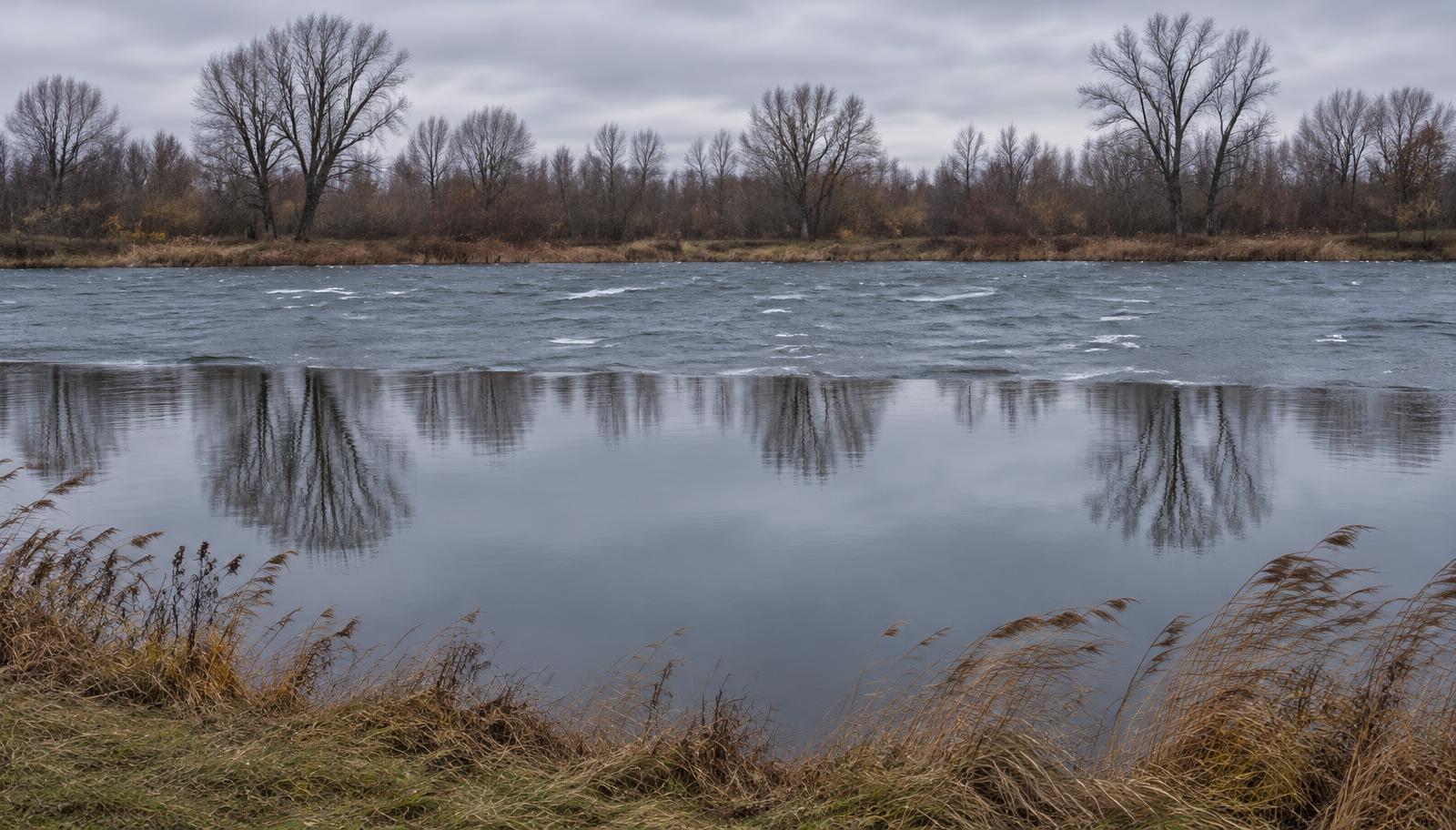
Something to notice
Watch the fetch
Next time you're beside a pond on a windy day, look at the water along the bank the wind is blowing from. Then look across at the bank it's blowing toward.
The breeze can be the same on your face while the two shores look quite different. The distance wind travels over open water is called fetch.
On a pond, you can often see its effect in a few hundred yards. On Lake Superior, that same detail belongs in the story of a ship.