Wx Feature · Weather & everyday life
The night the weather changed your coffee.
Your morning coffee has a weather story. This one begins on a winter night in Brazil—and ends at breakfast tables thousands of miles away.
July 17–18, 1975 · Paraná, Brazil · 4 min read
A winter night. Years of damage.
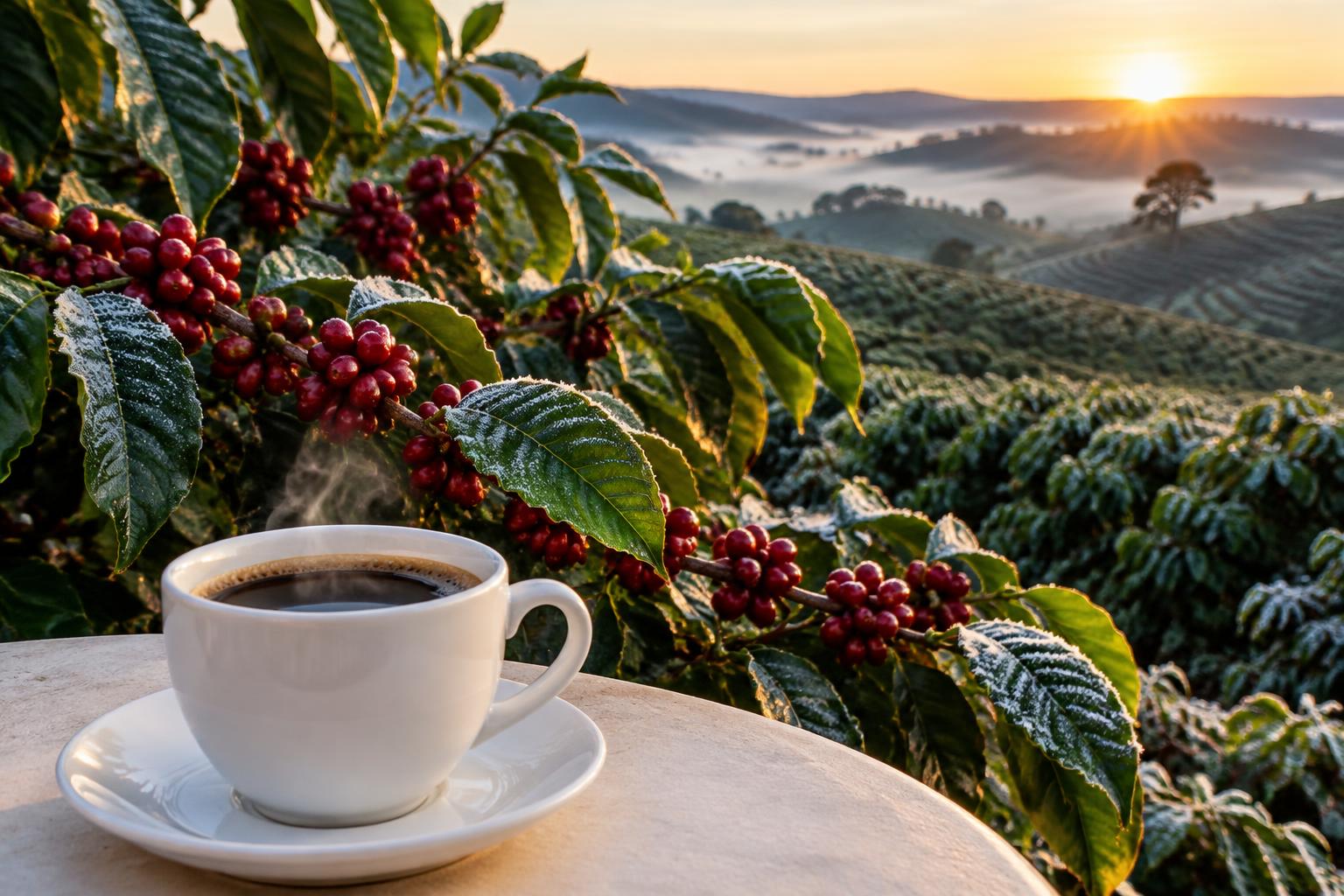
On July 17–18, 1975, polar air pushed into Brazil’s coffee country. In Paraná, trees that had supported families for years suffered devastating freezing damage. Leaves and branches darkened. The event became known as the geada negra: the black frost.
Paraná had produced nearly half of Brazil’s coffee that year. The following season, its production had almost vanished.
The cold lasted days.
The damage lasted years.
A coffee tree is an investment in future mornings. Destroy it, and planting another doesn’t bring next season’s supply back. Replacement trees can take roughly four years to become productive. The freeze therefore reached into harvests that hadn’t happened yet.
A World Bank assessment estimated that the disaster cut Brazil’s output by more than half and reduced worldwide coffee production by 17% in 1976.
From the farm to your grocery bill
The world still wanted its coffee. Buyers began competing for a smaller future supply.
New York bean quotations jumped from almost 70 cents a pound before the freeze to 88 cents that August. The price boom continued into 1977, amplified by other supply pressures and speculation.
Weather in one growing region became a bigger grocery bill somewhere else.
But Brazil gets frost?
Yes. Think beyond the tropical postcard.
Southern Brazil is exposed to winter outbreaks of polar air, and coffee growers had suffered damaging freezes repeatedly before 1975—including in 1953, 1962, 1969, and 1972.
Frost was a known risk. What made this event extraordinary was its severity and the amount of coffee country it struck.
Did anyone see it coming?
Knowing a place can freeze is different from knowing how destructive the next freeze will be.
The accounts reviewed don’t establish a specific advance warning that prepared growers for the scale of the disaster. Cocamar, a Brazilian agricultural cooperative, remembers it as a shock—and established its own meteorological operation in 1978. Paraná’s dedicated frost-alert service followed in 1995, providing warnings 24–48 hours ahead.
The freeze even helped redraw the coffee map. Farmers in Paraná switched crops, while coffee production increasingly moved north toward Minas Gerais to reduce frost exposure.
Something to notice
The weather in your cup
That’s something to notice over your next cup: the weather behind an everyday ritual. Somewhere, months or years before that coffee reached your kitchen, a plant needed the atmosphere to cooperate.